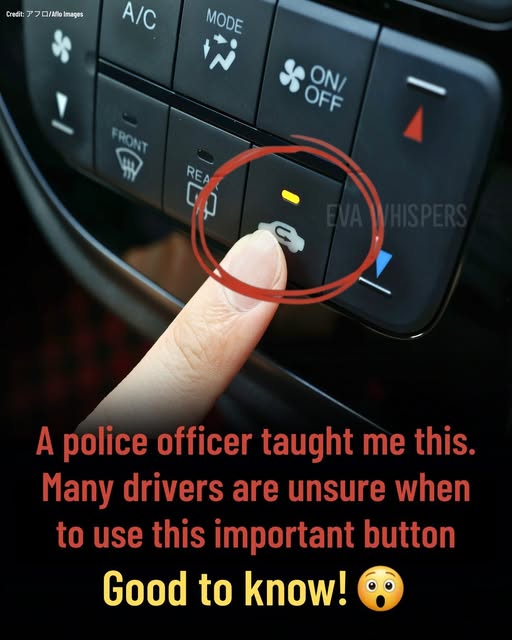



Almost every modern vehicle has a small dashboard button showing a car with a curved arrow inside. Some drivers press it often, others ignore it entirely. Yet this modest symbol controls one of the most important comfort and air-quality functions in your car: the air recirculation system.
Understanding how this feature works—and when to use it or avoid it—can improve cabin comfort, protect your health, increase efficiency, and even reduce wear on your air-conditioning system.

What Air Recirculation Actually Does
Your vehicle’s heating, ventilation, and air-conditioning (HVAC) system operates in two basic modes:
Fresh Air Mode (Recirculation OFF)
Outside air is drawn into the vehicle, passes through the cabin air filter, is heated or cooled, and then distributed inside. This mode continuously replaces interior air with fresh outdoor air.

Recirculation Mode (Recirculation ON)
A motorized flap closes off the outside intake, and the system reuses the air already inside the cabin. That air is repeatedly cooled or heated in a closed loop, allowing the HVAC system to work more efficiently under certain conditions.
Why Recirculation Cools the Cabin Faster
In hot weather, recirculation is especially effective because the system does not have to repeatedly cool hot outside air. Already-cooled cabin air requires less energy to cool further, allowing interior temperatures to drop faster. This reduces strain on the air-conditioning compressor and can slightly improve fuel efficiency in gasoline vehicles or extend range in electric cars.
Protection From Pollution and Allergens
Recirculation also plays an important role in air quality, particularly in urban or high-traffic environments. It helps block exhaust fumes in traffic jams, diesel smoke from trucks, industrial odors, dust, and sand.
For people with asthma or allergies, limiting outside air intake can reduce exposure to pollen, mold spores, and airborne pollutants. Even before filtration, fewer irritants enter the cabin.
The Hidden Risks of Overusing Recirculation
Despite its advantages, recirculation should not be left on continuously.
Foggy windows
In cold or rainy conditions, moisture from breathing accumulates inside the cabin. Humidity rises quickly, and windows fog more easily. Fresh air helps remove moisture and maintain visibility.
Reduced oxygen levels
On long drives, oxygen levels inside the cabin can slowly decrease while carbon dioxide increases. This may contribute to fatigue, headaches, or drowsiness—especially during highway driving. Fresh airflow helps maintain alertness.
A Common Winter Mistake
Many drivers unknowingly worsen window fogging by using recirculation in cold weather. While it may feel warmer at first, trapped moisture quickly overwhelms the system.
Best practice in winter:
Use fresh air mode
Combine it with defrost settings
Turn recirculation off when windows fog
The Importance of the Cabin Air Filter
The effectiveness of both fresh air and recirculation depends heavily on the cabin air filter. A clogged filter can cause weak airflow, musty odors, reduced heating and cooling performance, and increased strain on the blower motor.
A practical guideline is to replace the cabin air filter every 12,000–15,000 miles or once a year. Replacement may be needed sooner if you drive in polluted areas, have allergies, or notice reduced airflow.
Smart Everyday Use
Turn recirculation ON when:
Cooling the car quickly on hot days
Driving in heavy traffic
Passing through dusty or polluted areas
Reducing allergens inside the cabin
Turn recirculation OFF when:
Windows begin to fog
Driving long distances
Weather is cold or very humid
You want fresher cabin air
Many newer vehicles automatically manage this feature, but manual control still allows drivers to fine-tune comfort and safety.
A Small Button With a Big Impact
That simple circular-arrow button is more than a convenience feature. Used correctly, it improves comfort, protects health, increases efficiency, and enhances safety throughout the year.
Knowing when to use air recirculation—and when to switch it off—turns an often-overlooked dashboard symbol into a practical tool for smarter, more comfortable driving.
