
For decades, the intersection of work and faith in the United States has been defined by a single question: How far must an employer go to accommodate the religious beliefs of an employee?
In workplaces across the country—from small-town post offices to massive corporate headquarters—this question has sparked countless debates, tense HR meetings, and in some cases, long legal battles.
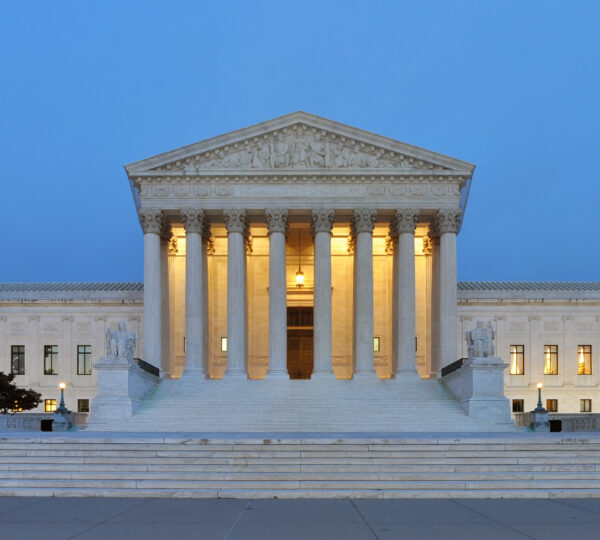
But few of those battles were as consequential, as emotionally charged, or as nationally significant as the case brought forward by Gerald Groff, a humble Christian mail carrier from Pennsylvania whose quiet struggle eventually reached the highest court in the nation.
What began as a local dispute over Sunday delivery duties would go on to reshape federal law, redefine the meaning of “undue hardship,” and unite the Supreme Court’s nine justices in a rare moment of complete agreement.
The Court’s 9–0 decision did not simply resolve one man’s dilemma—it transformed the way American workplaces must balance business needs with religious commitment.
But to understand why this decision became so important, one must begin with the man at the center of it.
A Quiet Postal Worker and a Deeply Held Belief
Gerald Groff was not a political figure. He was not an activist, a professional litigator, or someone seeking the spotlight. He lived a simple life in rural Pennsylvania, surrounded by rolling farmland, old barns, and quiet roads that seemed untouched by time.
For years, he served faithfully as a rural carrier associate—a demanding role that required him to fill in for full-time postal workers whenever they were absent.
The job wasn’t glamorous, but Groff approached it with the diligence and humility expected from someone raised with the values of discipline and faith. He covered holidays, late shifts, long routes, and unpredictable schedules without complaint.
But there was one boundary he would not cross: he would not work on Sundays.
For him, Sunday was a sacred day reserved for rest, reflection, worship, and family. It was a principle woven tightly into his upbringing and spiritual identity. From childhood sermons to family traditions, from scripture to personal conviction, he had always believed that the Sabbath was a day set apart.
For years, this had never been a problem. The Postal Service didn’t deliver on Sundays. It was a tradition older than Groff himself. That weekly pause—stillness in a world that rarely stops—had always been respected.
But everything changed in 2013.
That year, the U.S. Postal Service entered into a major partnership with Amazon, agreeing to deliver its growing wave of packages on Sundays. This contract was part of a broader effort to revive USPS finances, modernize its operations, and meet public demand for rapid delivery.
To many Americans, this was simply an innovation—a convenience.
To Groff, it was the beginning of a storm.
Pressure, Discipline, and a Rising Conflict
At first, Groff was able to avoid Sunday shifts through scheduling arrangements and voluntary swaps. He took on unpopular hours during the week, covered challenging routes, and made himself available in ways few others could.He hoped that his dedication would preserve his religious commitments without burdening others.
But as Amazon delivery volume increased, the flexibility evaporated. Managers began assigning mandatory Sunday shifts to all rural carrier associates—including Groff.
When he refused to accept Sunday assignments, citing his religious beliefs, disciplinary write-ups followed. He was labeled unreliable. He was penalized for absences. The working environment grew increasingly strained.
What had once been a harmonious workplace became a source of tension and emotional turmoil. Groff, a man who had always taken pride in his work, began to dread each new schedule posted on the wall.
He tried every solution available:
-
asking for swaps,
-
offering to work extra hours on other days,
-
volunteering for holidays,
-
requesting alternative assignments.
But nothing worked.
Eventually, he was faced with an impossible choice:
abandon his religious convictions or lose his career.
And so he resigned—heartbroken, uncertain, but determined that the principles of his faith were not negotiable.
A Legal Battle Fueled by Faith and Principle

Most people in Groff’s position might have walked away quietly.
But Groff believed that his situation represented a larger injustice—one that affected countless religious Americans of all backgrounds.
He saw coworkers of different faiths—Muslim employees seeking prayer breaks, Jewish workers needing accommodations for holidays, Hindu employees requiring specific rituals—who often felt powerless under the current law.
So he took a step that would eventually echo across the entire nation:
he filed a federal lawsuit.
His argument was simple but profound:
The law promised reasonable accommodation unless it caused “undue hardship.”
But courts had twisted “undue hardship” into meaning any inconvenience, even a minimal one.
Groff’s team argued that employers had been given too much freedom to deny religious accommodation on trivial grounds, and that workers with sincere faith commitments deserved real protection, not symbolic lip service.
The case wound its way through the lower courts, facing sharp debates, conflicting interpretations, and mounting public attention. Groups representing minority religions—Muslims, Jews, Hindus, Sikhs—stood by Groff, arguing that the current standard disproportionately harmed them.
Brief after brief poured into the Court, raising one central question:
Should a worker lose their job for choosing their faith over their schedule?
For years, the answer was unclear.
Until the Supreme Court agreed to hear the case.
A Rare Moment of Unity on the Supreme Court
When the nine justices convened to hear arguments in Groff v. DeJoy, legal experts expected a split decision. The Court had grown increasingly polarized in recent years, and religious liberty cases often produced sharp ideological divisions.
But something different happened.
The justices—liberal and conservative alike—engaged with the case through a shared lens of fairness and constitutional duty. They questioned the 1977 Hardison ruling, they probed the meaning of “undue hardship,” and they examined whether the law, as applied, had strayed far from its original purpose.
During the sessions, Justice after Justice expressed concern that the “de minimis” standard had effectively stripped Title VII of its protective power.
By the time oral arguments ended, legal analysts sensed a surprising possibility:
The Court might unite.
And they did.
In a unanimous 9–0 decision, the Supreme Court ruled in favor of Gerald Groff, strengthening protections for religious employees and rewriting the national understanding of workplace accommodation.

A Decision That Redefined “Undue Hardship”
The Court clarified that:
-
Employers can no longer deny accommodations for minor inconvenience.
-
“Undue hardship” must mean substantial, real, and meaningful burden.
-
Religious employees must be given serious consideration—not dismissed with broad generalizations.
-
Workplace flexibility must be explored before an employer can reject a request.
-
Respect for faith practices is not optional—it is part of federal law.
This decision will influence workplaces in every industry:
-
postal workers
-
Amazon drivers
-
nurses
-
teachers
-
factory employees
-
restaurant and retail workers
-
corporate professionals
-
public-sector employees
Millions of Americans will feel the effects.
And it all started with one quiet mail carrier who refused to compromise what he believed.
The Case That Sparked a National Conversation
Groff’s victory renewed an important national dialogue about:
-
fairness in scheduling
-
respect for religious diversity
-
the balance between personal belief and workplace obligations
-
the rights of minority-faith employees
-
the responsibilities of employers in a pluralistic society
It also reminded Americans that big change often begins with ordinary people—individuals with no political power, no wealth, and no public influence—who simply refuse to let principle crumble under pressure.
When the Supreme Court issued its unanimous decision in Groff v. DeJoy, the response echoed across the country in waves—legal scholars analyzing the implications, religious communities expressing relief, labor unions evaluating new challenges, and ordinary workers reconsidering what rights they actually had. It wasn’t just another Supreme Court ruling; it was a profound recalibration of what it means to respect the beliefs of millions of Americans.

The ruling did more than settle one man’s dispute with his employer. It forced the entire nation to reconsider a long-standing question:
Is religious freedom truly protected if a worker must choose between faith and livelihood?
For decades, the answer had been fuzzy—defined by court cases that varied by circuit, interpreted inconsistently, and applied unevenly across workplaces. Many employees didn’t even know they had the right to request religious accommodation. Some feared retaliation, others faced confusion or outright dismissal from management.
But with this ruling, the Supreme Court sent a powerful, unified signal:
religious accommodation is not optional — it is mandatory, unless the employer faces a substantial, concrete hardship.
This clarity instantly changed the law nationwide.
A New Legal Standard With Nationwide Reach
Before the Groff ruling, many employers used the “de minimis” standard as a shield against accommodating faith-based requests. If a worker asked for schedule adjustments, prayer breaks, religious clothing allowances, or observance of holidays, businesses often claimed even minor inconvenience as justification to deny the request.
Courts frequently sided with employers.
But after the Supreme Court’s decision, the landscape shifted dramatically.
The new standard requires employers to:
-
carefully evaluate religious requests,
-
explore alternative solutions,
-
communicate transparently with employees,
-
provide accommodations when realistically possible,
-
demonstrate real, significant difficulty if they deny a request.
This change affects countless real-world situations:
-
A Muslim employee needing a quiet space for afternoon prayer.
-
A Jewish worker requesting time off for Yom Kippur.
-
A Sikh employee requiring permission for religious turban wear.
-
A Christian employee seeking Sunday off for worship.
-
A Hindu worker needing leave for major festivals.
Suddenly, the law that once left many religious minorities without protection had new strength and clarity.
National Reactions: Relief, Debate, and Reflection
Faith Communities Celebrated the Decision
Religious organizations from nearly every tradition praised the ruling. For them, this was not simply a victory for one Christian postal worker, but a win for all minority-faith employees who had been disproportionately affected by rigid workplace policies.
Jewish, Muslim, Sikh, Hindu, and Seventh-day Adventist groups all reaffirmed that the Hardison standard had caused countless people to struggle silently, forced to sacrifice spiritual commitments to keep their jobs.
For these communities, the ruling felt like validation—a recognition that their traditions, holidays, and rituals mattered in the diverse American landscape.
Labor Groups Expressed Mixed Concerns
While many appreciated the clarity the new rule provided, some labor organizations voiced concerns about how this ruling could impact staffing demands, especially in understaffed or high-pressure industries.
However, the Court was careful to maintain a balance. They did not say employers must accept every request, only that:
-
the old standard was too lenient,
-
minor inconvenience is not enough,
-
substantial hardship must be proven.
This means workplaces still maintain structure — but now with a stronger obligation to respect religious practices.
Legal Experts Called It a “Major Reset”
Professors of law, civil rights attorneys, and workplace compliance experts immediately began analyzing the ripple effects. Many pointed out that the ruling did not overturn existing law, but rather corrected decades of misinterpretation.
By redefining the meaning of “undue hardship,” the Court effectively revived the original intent of Title VII:
to create workplaces that respect diversity, equality, and freedom of conscience.
Some scholars predict that thousands of workplace policies may need to be updated, and that future lawsuits will test how far the new standard can go.
Others believe the ruling will encourage employers to implement clearer accommodation guidelines proactively, reducing conflicts before they escalate to legal action.
The Human Impact: Real Lives, Real Stories
Beyond legal jargon and national headlines, the ruling touches real people:
-
A Muslim cashier who risked losing her job when she asked for prayer breaks.
-
A Jewish teacher who struggled every year to balance high holidays with school scheduling.
-
A Sikh father who was once told his religious turban was “unprofessional.”
-
A Christian nurse who begged for one Sunday off each month to attend church.
-
A Hindu office worker who needed time for Diwali but was told “it’s not a recognized holiday.”
For them, the Groff ruling wasn’t a political decision—it was a lifeline.
A quiet assurance that their faith, their identity, and their traditions were not obstacles but protected truths.
A Look Back: How Did America Get Here?
To fully appreciate the significance of this decision, one must look at how the legal understanding of religious accommodation evolved.
1964 — Title VII is passed
The Civil Rights Act prohibits workplace discrimination based on religion, race, gender, or national origin.
1977 — Hardison creates the “de minimis” rule
The Court rules that employers can deny religious accommodations if they impose “more than a minimal” cost. Over time, courts interpret this extremely broadly.
2010–2020 — Religious diversity expands dramatically
The workforce becomes more culturally diverse, creating new questions about holidays, clothing, prayer, and rituals.
2023 — Groff brings clarity
The Supreme Court unanimously strengthens protections for religious observance, rejecting decades of overly broad interpretations.
This timeline shows something powerful:
the law evolves, but justice often requires brave individuals to challenge what seems unquestionable.
Groff became one of those individuals.
A Case That Transcended Politics
In today’s polarized America, it’s rare to see the right and left align on a major social issue. Yet this case bridged ideological divides.
-
Conservative justices saw the ruling as a restoration of traditional religious freedom principles.
-
Liberal justices viewed it as a protection for minority communities who faced unequal treatment.
-
Civil rights groups appreciated the renewed clarity.
-
Constitutional scholars appreciated the unified interpretation.
For a brief moment, at least, the country saw a glimmer of what justice looks like when the focus is fairness—not party lines.
Gerald Groff’s Legacy
At the heart of this legal transformation stands a man who never sought attention. A mail carrier whose quiet life took an unexpected turn. A believer who felt morally compelled to stand firm. A worker who simply wanted to honor his faith without sacrificing his livelihood.
In interviews after the ruling, Groff spoke with humility, emphasizing that he hoped the decision would help not only Christians, but “all people of faith who work hard and follow their beliefs.”
His story now lives as a reminder that even ordinary individuals can shape national law.
The Path Forward: What Comes Next?
With the new standard in place, several important changes are expected:
1. Workplaces will need updated policies
Employers must clarify how they handle religious requests, document accommodation efforts, and provide transparent communication.
2. Employees will gain more confidence
Workers of all faiths may feel safer requesting accommodations without fear of retaliation.
3. Courts will refine the standard
Future cases will test the boundaries of the ruling, clarifying nuances as new conflicts arise.
4. Corporate and government employers must adapt
Large institutions with strict schedules—like USPS, hospitals, airlines, and manufacturing plants—will face new expectations for flexibility.
5. National dialogue will continue
This ruling invites ongoing conversations about pluralism, equality, and America’s commitment to freedom of belief.
A Defining Moment for Religious Freedom
In the end, this ruling is about more than Sunday deliveries, Amazon packages, or USPS policies.
It is about dignity.
It is about conscience.
It is about the assurance that personal faith should not be sacrificed for employment.
As businesses evolve, as beliefs diversify, as workplaces change, this Supreme Court decision stands as a pivotal moment in American history—a reminder that the country’s commitment to religious freedom remains strong, even in a rapidly shifting world.
