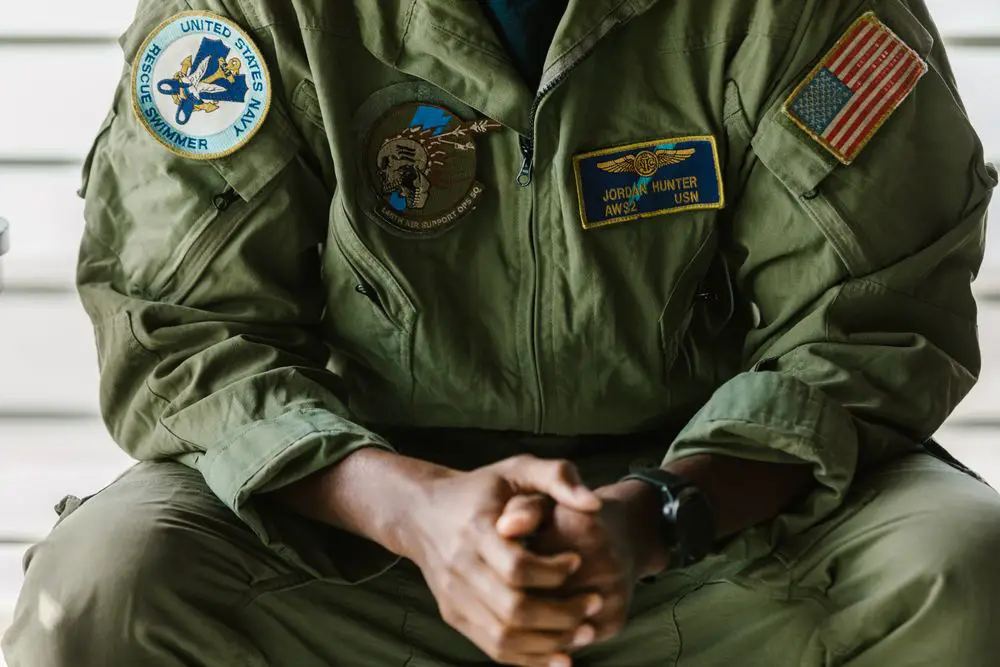
The first thing my mother did when she saw me at Naval Amphibious Base Coronado was look past my face and down at my black dress.
Not into my eyes.
Not at the visitor pass clipped near my shoulder.
Not at the small dark-blue folder tucked under my arm.
The dress. Her gaze dropped to it like a verdict.
The second thing she did was ask the security guard to move me.
“She is just the disappointing sister,” my mother said softly, as if soft cruelty did not count. “Please don’t let her make this awkward.”
My father laughed. Not a big laugh. Thomas Carter did not like to appear vulgar in public. It was the small, polished kind he used when he wanted strangers to understand the family had already voted and I had already lost.
The security guard stood between us with a clipboard in one hand and my visitor pass in the other. He was young enough to still look uncomfortable when wealthy-looking mothers turned family problems into administrative instructions. His eyes moved from my mother’s pearls to my father’s watch, then to me.
I saw my name on his clipboard before my mother did.
Emily Carter.
Beside the family list was another column with fewer names and a different heading.
Official Protocol Addendum.
The guard’s eyes paused there.
My mother stepped closer, her voice dropping into the tone she used when she wanted to seem reasonable while doing something unkind.
“Today is about Ryan.”
Ryan stood twenty feet away in dress whites with a new Trident waiting for its moment on his chest. He looked exactly like my father’s favorite story. Tall, clean-cut, broad-shouldered, golden in the bright California morning. Football captain. Homecoming king. The son who had made it through BUD/S, SEAL Qualification Training, and every sentence my father had ever bragged through in hardware stores, church lobbies, airport lounges, and Fourth of July backyards.
Then Ryan looked at me.
“Don’t embarrass me today, Emily.”
The morning smelled like salt air and hot pavement and sunscreen and coffee going cold in paper cups. White tents snapped lightly in the Pacific breeze. Children waved small American flags from rows behind us, and parents sat straighter than usual because pride makes people fix their posture.
I had driven six hours through the night to sit in one chair and clap for my brother.
No speech. No scene. No correction.
I had promised myself that.
So I sat. I folded my hands in my lap. I smiled politely.
And I said nothing.
That was the part my family always hated most. They could handle anger because anger let them call me dramatic. They could handle tears because tears let them call me unstable. Quiet gave them nothing to hold. Quiet forced them to hear themselves.
My mother leaned toward Aunt Patricia, who sat to her left in a coral blazer and the satisfied expression of a woman who had never missed a chance to be on the winning side of a family argument.
“She wore black,” Mom whispered, loudly enough for three rows to hear. “To her own brother’s proudest day.”
I looked down at the plain dress.
Black was not an insult. Black packed well. Black did not wrinkle badly. Black did not show coffee spills. Black did not show sweat when you had driven through the night with one hand on the wheel and old memories sitting beside you like passengers who refused to sleep.
Black did not show blood easily.
That last part was not a family detail. It belonged to rooms my mother had never entered and nights I did not have permission to describe.
To my family, I was still the woman who had left college, stopped explaining herself, missed holidays, sent expensive gifts without return addresses, and come home with calm eyes and scars nobody knew how to ask about. They preferred that version. It kept the house simple. If I was secretive, they did not have to be incurious. If I was strange, they did not have to be cruel. If I was the disappointing sister, Ryan could remain the easy son in every story they told.
My cousin Madison turned around in her red sundress and glossy confidence. Madison had been raised on the same family mythology, though she had absorbed it with more enthusiasm than intelligence.
“Emily, seriously,” she said, glancing at the seat beside mine, “why are you sitting here? This section is for immediate family.”
“I am immediate family.”
“I mean supportive immediate family.”
Aunt Patricia laughed into her program.
My father did not correct her. My mother did not correct her. Ryan heard it too. He was lined up with the other candidates, jaw tight, eyes forward, but when Madison said it, the corner of his mouth moved.
Not a smile.
Worse.
Agreement.
The stage held a podium, an American flag, rows of polished chairs, and a table lined with velvet cases. The gold Tridents caught the morning light like small pieces of fire. Families held programs that rustled against nervous fingers. Somewhere behind me, a little boy asked his grandfather why that lady looked sad.
I did not look sad. I looked trained. There is a difference.
At 5:42 that morning, I had received the protocol email. At 6:14, my visitor pass had cleared the gate. At 6:31, Senior Chief Alvarez had texted that Commander Nathaniel Hayes knew I was on base.
I had the email in my purse. I had the addendum folded in a dark-blue folder. I had the number I could call if I wanted to resolve the seating issue in less than thirty seconds.
I used none of it. Facts are useful. Timing matters more.
My father leaned across my mother, his voice low enough to pretend privacy and loud enough to make sure it landed.
“Emily, after this, don’t try to come to the private reception unless Ryan invites you. This is a military crowd. People will ask questions.”
That was how Dad hurt people. Quietly enough that witnesses could pretend they heard nothing.
I turned my head slowly. “What questions?”
He gave me his patient smile, the one he used when explaining something obvious to someone he believed had failed a basic test of life.
“About what you do. Where you have been. Why you never talk about it.”
Mom gave a small public laugh, the kind meant to make the insult sound affectionate. “Honey, today is about Ryan. Don’t make it strange.”
“I drove here for Ryan.”
Ryan turned just enough for me to see his face. “No,” he said. “You drove here to be seen.”
The words reached old places.
Christmas Eve, when my mother said she had not set a plate because she did not know I was coming, even though I had texted twice and driven through a storm with a wrapped gift in the back seat. A funeral where my father introduced me to a church elder as “our complicated one” while Ryan stood beside him in a suit, receiving condolences like a prince accepting tribute. Ryan’s thirtieth birthday, when he thanked me for an expensive watch I could not explain affording and joked that maybe someday I would get a real job.
I remembered all of it. Then I let it pass through me.
For one ugly second, I wanted to pull the folder from my purse and lay it on my father’s knee. I wanted him to read my name. I wanted my mother to see the rank. I wanted Ryan to know that the sister he had warned not to embarrass him had been listed in official ceremony paperwork before he ever stepped onto that stage.
I did not move.
Sometimes dignity is not a speech. Sometimes it is letting people finish showing you who they are.
My family had been showing me for years.
I used to fight harder. That might surprise people who only knew me after the quiet had settled into my bones. At thirteen I argued. At fifteen I slammed doors. At seventeen I wrote letters I never sent, full of the hot, pleading language of a daughter still convinced the right explanation could unlock a parent’s heart.
Ryan was three years younger than me, but in our family, age never decided importance. From the time he could throw a football in a clean spiral, my father treated him like a forecast of greatness. My mother dressed him in little polos and called him their sunshine. Teachers loved him. Coaches adored him. Neighbors stopped by the fence to say he had natural leadership, which mostly meant he was loud and handsome and had learned early that confidence could be mistaken for character.
I was quieter. Not because I had nothing to say, but because saying it rarely changed anything.
When I brought home straight A’s, my mother put the report card in a drawer and asked me to help Ryan with math. When I won a regional science competition, Dad said “that’s great, Em” while watching Ryan’s football highlights on his phone. When I got into a strong university on a partial scholarship, my parents said they were proud, then spent dinner discussing Ryan’s recruiting prospects.
Ryan did not ask for all of it, not in the beginning. That was the part that made resentment complicated. Little boys do not build thrones. Adults do. And once a child has been placed on one, he often learns to mistake height for virtue.
There were moments when Ryan was still my brother. Real ones.
When he was nine, he broke Mom’s porcelain angel throwing a tennis ball in the living room. He crawled under the couch and cried because he thought Dad would be furious. I found him there with dust on his cheek and told our parents I had knocked it over while vacuuming, even though no one had asked me to vacuum.
When he was twelve, he sat on the back steps after a bad football practice, rubbing grass stains on his knees, and asked whether fear made him weak. I told him no. Fear was information. Courage was what you did after receiving it.
He hugged me hard that night. Then morning came, our parents wrapped pride around him like armor, and he remembered who he was supposed to be.
I left home at nineteen.
My parents told people I left college because I lacked discipline. That was the version that made sense to them. In truth, I left because the Navy offered a path my family had not chosen for me, and I was desperate enough for a life of my own to take it. I enlisted first, then earned my commission later through a program that required more stubbornness than elegance. I studied at night. I trained before dawn. I learned that competence was a language people could not easily dismiss when lives depended on it.
My work moved into places where family newsletters did not go.
At first I tried to explain what I could. “I’m attached to a support unit.” “I work with special operations communications and medical coordination.” “I can’t discuss details, but I’m safe.”
My mother heard secrecy and called it evasiveness. My father heard limitations and called them excuses. Ryan heard military and decided my service was a strange little hobby that made family dinners inconvenient.
Over the years, I gave up. Not in my work. Never there. I gave up translating myself for people who preferred the wrong language.
The Navy did not need me to be charming. It needed me precise. It needed me awake at 0200 when a satellite call came in from a place most Americans could not find on a map. It needed me to memorize sequence timing, evacuation windows, medical readiness reports, and the small details that separate a clean extraction from a letter delivered to someone’s mother.
By thirty, I had learned to enter rooms where men looked through me once and never made that mistake again. By thirty-two, I had scars no one at home knew how to name. By thirty-six, I had been attached to enough sensitive operations that my family’s idea of my life had become almost peaceful in its ignorance.
I was the disappointing sister.
Fine. Disappointment is easier to survive than being loved only when convenient.
Still, when Ryan called three months before his Trident ceremony, I answered.
He did not call often. When he did, it was usually because my mother had told him to ask whether I would attend a holiday, or because he wanted advice he would pretend later came from somewhere else.
This time his voice was different.
“Em?”
I was in my apartment in San Diego, packing a go-bag I hoped I would not need. Rain had been falling since afternoon, soft against the windows.
“Yeah?”
“I finished.”
There was no need to ask what. BUD/S. SEAL Qualification Training. The long, brutal path he had spent years chasing.
For a moment, the little boy under the couch and the man on the phone became the same person. I sat on the edge of the bed.
“I’m proud of you,” I said.
He was quiet. Then he breathed out. “Thanks.”
“Are you okay?”
“Just tired.”
“That makes sense.”
Another pause. Then, lower: “Were you ever scared? In your training?”
The question landed gently in a place I had not let him near for years.
“Yes.”
He laughed once, uncomfortable. “You don’t seem like you get scared.”
“That just means I got better at filing it.”
He was quiet again.
“I don’t want to mess it up,” he said.
“You will mess things up. Everyone does. The question is whether you become the kind of man who can admit it fast enough to fix it.”
He did not answer right away. Then he said, “Will you come?”
“To the ceremony?”
“Yeah.”
I looked at my half-packed bag. “Do you want me there?”
It should have been an easy question. It was not.
Finally, he said, “You’re my sister.”
That was not yes. It was close enough for the part of me that still remembered him at nine years old under the couch.
“I’ll come,” I said.
Now, three months later, under a white tent at Coronado, my brother had looked at me and said I had driven six hours to be seen.
Maybe that was why I did not show him the folder. I wanted to know whether the boy who had called me in the rain still existed when the audience arrived.
At first, the answer seemed to be no.
The ceremony staff moved with controlled urgency near the podium. Families settled into rows. A chaplain checked the microphone. Senior chiefs gathered in quiet conversation, the kind where faces barely moved but decisions did. The candidates stood in disciplined formation, each man trying to look calm while the biggest symbol of his young career waited in velvet.
Commander Nathaniel Hayes stood near the stage speaking to two senior chiefs. He was tall, gray at the temples, with a face that did not waste movement. I knew him from years earlier, not as a family guest but from a place where maps were classified, coffee was terrible, and every sentence carried weight. Back then he had been a lieutenant commander with sharper edges and darker hair, the kind of officer who noticed who had done the work before anyone said who should get credit.
I had not expected him to remember me with warmth. I expected accuracy. In my world, accuracy was often kinder than affection.
At 8:47, Commander Hayes stopped talking.
His eyes moved across the family section once. Then again. The second time, they were not searching. They were finding.
He looked at the security guard. He looked at the empty reserved chair near the stage. Then he looked directly at me.
My mother noticed first. Her small laugh died with her mouth still open.
Commander Hayes stepped away from the podium. The senior chiefs turned with him. The candidates sensed the shift before the audience did. That was something training did: it made men notice when command attention moved. Ryan’s jaw changed by a fraction, but I had known him since he was a little boy hiding broken dishes under couch cushions.
I knew fear when it crossed his face.
Commander Hayes walked straight toward our row. Conversation thinned under the tent. Madison stopped smiling. My father sat back, then leaned forward again, as if posture could rescue him.
Commander Hayes stopped in front of my chair.
He brought his heels together.
Then he raised his right hand to his brow.
“Ma’am.”
The salute cut through the tent cleaner than any insult ever had.
I stood. Not quickly. Not dramatically. I stood the way I had learned to stand in rooms where panic helped nobody.
Commander Hayes lowered his hand only after I acknowledged him.
“We’ve been waiting,” he said.
The microphone near the podium was still live enough. Not booming. Enough.
A ripple moved through the first rows.
My mother looked at my father. My father looked at the security clipboard. Madison looked at Ryan. Ryan looked at me.
For once, nobody in my family knew what part to play.
Senior Chief Alvarez approached with the dark-blue ceremony folder. He was broad, square-jawed, and calm in the way senior enlisted leaders become calm after years of making chaos stand in line. He placed the folder on the security stand, opened it, and turned it so the guard could see.
My name was printed in block letters on the addendum.
Lieutenant Commander Emily Carter.
Special recognition guest.
Protocol hold until seated.
My mother made a sound too small to be a word. The guard’s face went red. Aunt Patricia folded her program shut.
“Emily,” Mom whispered. “What is this?”
It was remarkable how quickly people learned softness when authority entered the room.
Commander Hayes looked at my family, then back at me.
“Lieutenant Commander Carter was not assigned to general family seating,” he said. “That was an error.”
I almost felt sorry for the guard. Almost. He had seen the second column and still let my mother talk over it. The loudest person in a room is not always right. Sometimes they are only louder than the truth.
Commander Hayes gestured toward the reserved chair near the stage.
“Your assigned place is waiting, ma’am.”
Ryan stared at the folder.
I wondered if he remembered the night before training, the call in the rain, the question about fear. I wondered if shame felt like fear to him now, and whether he knew what to do after receiving it.
“Emily,” Dad said.
It was the first time that morning he said my name without making it smaller.
“Maybe there has been some confusion.”
“There has,” I said.
My mother reached for my wrist. I stepped back before she touched me. That hurt her more than a speech would have.
Commander Hayes waited. Then he said, “Before we continue, Lieutenant Commander Carter should decide whether her family remains seated in the front row.”
The sentence landed like a gavel.
Ryan swallowed. “Sir, with respect, she is my sister.”
Commander Hayes turned his head. “Yes. I am aware.”
No anger. No lecture. Some sentences are devastating because they refuse decoration.
I could have removed them. Everyone under that tent would have watched my parents stand. My mother would have cried. My father would have called it disrespect. Ryan would have remembered his Trident ceremony as the day I finally made him pay for every time he had let silence become agreement.
But I had not come for revenge.
I looked at Commander Hayes. “They can stay.”
My mother exhaled too soon.
I turned toward her. “But they will not speak for me again.”
Nobody moved. Even the little flag behind us seemed to stop tapping against the chair.
Commander Hayes nodded. “Understood, ma’am.”
He escorted me to the reserved chair. I walked past my family without looking down. At the front, Senior Chief Alvarez pulled the chair out, and the ceremony resumed.
Only it was not the same ceremony anymore.
The tent felt different. Not louder. More awake. Families still whispered, but carefully. Programs rustled with a softer shame. The children kept waving their flags because children do not understand adult corrections unless someone tells them, and thankfully no one did.
I sat with the dark-blue folder on my lap. The stage was close enough that I could see the individual threads on the velvet cases. The Tridents lay in perfect rows, each one representing months of pain, endurance, discipline, and a kind of voluntary suffering most people could not imagine and should not romanticize too easily.
Ryan had earned his place. That was important.
My family’s cruelty did not erase his work. His work did not excuse their cruelty. Two truths can sit beside each other even when everyone else wants one to destroy the other.
Commander Hayes returned to the podium and let the tent settle around the correction that had just taken place.
“Ladies and gentlemen,” he said, “thank you for your patience.”
No explanation. No apology. Not yet.
He spoke about discipline, sacrifice, and the difference between earning a symbol and understanding its weight. His voice moved across the tent, steady and exact. He told the candidates that the Trident was not a trophy. It was a responsibility. It would not make them better than others. It would require them to become better for others.
Then his tone shifted.
“Today we recognize the men who have completed a demanding course and earned the right to wear this insignia. We also recognize that no operator, no team, and no mission stands alone. Some service is visible because uniforms make it visible. Some service stays quiet because silence is part of the duty. But quiet service is still service. And the people who carry it deserve respect whether or not their stories can be told in full.”
My mother looked at me then. Really looked. Not at the dress, not at the tired eyes. At me.
That was the first time all morning I thought she understood that ignorance was not innocence.
Commander Hayes did not tell my story.
Not the corridors. Not the blood on black fabric. Not the names of people who did not come home. Not the night outside Kandahar when I had stood under harsh white lights beside a field surgical team, repeating coordinates into a radio while my left sleeve darkened and a corpsman told me to sit down only after the aircraft lifted. Not the operation three years later when a timing correction I passed through a restricted channel prevented a team from entering a compromised route. Not the men who later wrote statements I never asked for.
He said none of that. He only said what the ceremony could hold.
“Today,” Commander Hayes continued, “we have among us a guest whose professional contributions to Naval Special Warfare and joint support operations have shaped outcomes that will never be fully described from a podium. Lieutenant Commander Emily Carter’s presence here is not incidental. It is an honor.”
A soft sound moved through the tent.
My father turned his head toward me slowly. My mother’s hand rose to her pearls. Ryan’s eyes stayed forward, but his face had changed. The polish had gone out of it. He looked younger now, not weaker, younger, like someone who had just discovered that the house he grew up in had a locked room and that his sister had been living on the other side of the door.
The candidates were called one by one.
When Ryan’s name rang out, he stepped forward. “Ryan Thomas Carter.”
He crossed the stage with shoulders squared, his face less polished than before. Commander Hayes shook his hand. Senior Chief Alvarez lifted the velvet case. The Trident caught the sun as it was pinned to Ryan’s chest.
My mother began to cry. My father sat straighter. I clapped.
I clapped because Ryan had earned it. I clapped because pride and pain can exist in the same pair of hands.
When the last Trident was pinned, the tent rose in applause. Families surged forward too early and were gently redirected. Candidates stood with expressions hovering between relief, exhaustion, and disbelief. Cameras lifted. Mothers cried. Fathers clapped sons hard on shoulders. Children asked whether the ceremony was over and if there would be cake.
For a few minutes, the morning became what it had been meant to be.
Then my father approached me.
He looked smaller without the laugh.
“Why didn’t you tell us?”
There it was. The question people ask when they want the wound to become your responsibility.
“I tried,” I said.
His eyes flickered. Maybe he remembered the email he never answered. Maybe he remembered the Thanksgiving call he ended because Ryan had walked into the room. Maybe he remembered the time I came home with stitches under my sleeve and Mom told me not to bring strange energy into the house.
My mother came up beside him. “I didn’t know,” she said.
“I know.”
The answer hurt her because it was not forgiveness. It was fact.
Aunt Patricia hovered behind them, pale and quiet for once. Madison had disappeared toward the reception tent, which was a mercy for everyone.
My father lowered his voice. “You have to understand how this looked to us.”
I looked at him for a long moment. “How what looked?”
“You leaving college. Disappearing. Not explaining. Missing holidays. Coming home like a stranger and expecting us to know what to do with that.”
The old habit rose. Explain. Soothe. Make the wound easier for him to hold.
I did not obey it.
“You never asked what to do with it,” I said. “You decided.”
My mother flinched.
“That is not fair,” Dad said.
“No. What was not fair was being nineteen and learning that every version of myself that did not flatter this family would be treated like a defect.”
His mouth tightened. “You chose to leave.”
“I chose to survive outside a house where love had a ranking system.”
My mother looked away first.
There are sentences families spend years avoiding because once spoken, they rearrange the furniture permanently.
Ryan finally walked toward us.
His new Trident was bright against his chest, almost too bright. He kept touching it without realizing, as if checking whether it was real.
“Em,” he said.
No one in my family had called me that in years.
He looked at the folder in my hand, then at Commander Hayes near the podium, then back at me.
“I’m sorry.”
The words were not polished. They were not enough. But they were real enough to begin with.
“I knew there were things you couldn’t talk about,” he said. “I didn’t know all of it. But I knew enough not to say what I said today.”
My father shifted like he wanted to organize the apology into something safer.
Ryan raised one hand without looking away from me. Dad stopped.
That was new.
Ryan swallowed. “Before BUD/S, I called you because I was scared.”
“I remember.”
“You answered. You helped me. And then today, with everyone watching, I acted like you came here to take something from me.” He shook his head. “That was small.”
“Yes,” I said.
His eyes shone, but he did not look away. “I am sorry.”
The tent moved around us, full of handshakes and photographs and proud noise, but our small circle had gone quiet.
“The Trident is yours,” I told him. “What you do with the man wearing it is still up to you.”
His throat moved. He nodded.
At the private reception, my name was already on the seating chart. Not as Ryan’s embarrassing sister. Not as an afterthought. As the person Commander Hayes had delayed the ceremony to honor.
The reception was held in a white tent near a low building with windows facing the water. Navy linens, small centerpieces, place cards arranged with the kind of precision that made it clear a senior chief had frightened the event staff into excellence. Coffee urns at the far end. Plates of fruit, pastries, and finger sandwiches in careful rows. Through the open tent flap, the Pacific flashed blue under the sun.
People congratulated Ryan first, as they should have. His classmates slapped his shoulder. Parents asked for photographs. Senior chiefs shook his hand and gave short, serious advice that sounded like blessing and warning at the same time.
Then a few came to me.
They did not ask for stories. They did not ask for details. They only shook my hand and said, “Thank you.”
A captain I had worked with once in Bahrain greeted me with a nod that said more than his words. A medical officer from a joint support unit told me quietly that one of my old procedural notes was still being taught. Senior Chief Alvarez brought me coffee without asking how I took it, then apologized because he had guessed wrong.
“I’ve had worse,” I said.
He looked offended. “Ma’am, that is not the standard.”
My mother watched every handshake. My father watched senior chiefs make room for me without being asked. Aunt Patricia tried to say something to one of them, probably to recover her social footing, but the senior chief excused himself before she found a clean way in. Madison did not speak to me at all.
That might have been the kindest thing she ever did.
Commander Hayes approached after the reception had settled.
“Lieutenant Commander,” he said.
“Commander.”
He held out his hand. I shook it. “I regret the seating confusion.”
“I’m sure someone regrets it more now.”
One corner of his mouth moved.
“I imagine so.”
He glanced toward my family, then back at me. “You handled it with more grace than many would have.”
“That’s a generous word.”
“It is also accurate.”
I looked toward Ryan, who stood beside my father while my mother adjusted his collar for a photograph. He let her, but his eyes kept moving toward me, uncertain and sober.
“I didn’t want to make his day about me,” I said.
“You didn’t. They almost did.”
That sentence was more comfort than I expected.
Commander Hayes lowered his voice. “There are things in your record that deserve daylight, even if the details cannot have it. That is why you were invited under protocol today.”
“I know.”
“Do you?”
I looked at him. His expression stayed controlled, but something behind his eyes softened.
“Emily,” he said, using my first name carefully, “quiet service still leaves marks. If no one names it, sometimes the people who carried it start believing it was invisible.”
I looked down at the coffee in my hand. The cup trembled slightly. I hated that.
He pretended not to see.
“Thank you,” I said.
He nodded once. “You earned the seat.”
Before I left, Ryan caught me near the doorway.
The Pacific light was bright behind him, and his Trident was still new enough that he kept touching it without realizing. Up close, I could see the exhaustion under his eyes. The ceremony had ended, but something harder had begun.
“Will you come home for dinner when I’m back in Virginia?” he asked.
There were years between us. Years of missed calls, sharp jokes, rooms where nobody defended me, and one morning under a tent when he had chosen the audience over the sister who had answered his fear.
One salute could not fix that. One apology could not rebuild a family. But a person can begin by telling the truth once and then telling it again tomorrow.
“We’ll see,” I said.
He understood that was more than he deserved.
My mother called my name and held out the black jacket I had left over a chair. For once, she did not tell me what I had done wrong. She only handed it to me.
“I’m proud of you,” she said.
The words sounded unfamiliar in her mouth. I did not know what to do with them yet.
So I stayed quiet.
But this time, my quiet did not mean I was disappearing. It meant I was choosing.
I drove back to San Diego that evening instead of staying for dinner.
My mother texted twice before I reached the freeway. The first message was exactly what I expected.
We need to talk.
The second came seven minutes later.
I am sorry about today.
I read it at a gas station beneath fluorescent lights, the ocean air replaced by the smell of gasoline and hot asphalt and stale coffee drifting from the convenience store. My black dress was wrinkled. My feet hurt. The dark-blue folder sat on the passenger seat like a witness.
I did not answer. Not because I wanted to punish her. Because urgency is not the same as entitlement.
My father called once. I let it go to voicemail.
Ryan did not text until almost midnight.
I’m sorry I let them make you a stranger.
I sat on the edge of my bed and read that sentence for longer than it required.
My apartment was quiet. The navy jacket hung over a chair. My shoes were by the door. The folder lay open on the table, the addendum visible beneath the soft yellow light. I had placed it there on purpose, not hidden in a drawer, not shoved into a bag as if evidence of my own life were something impolite.
I wrote back one sentence.
Then don’t do it again.
Three dots appeared. Disappeared. Appeared again.
Finally, his reply came.
I won’t.
Promises are easy at midnight. Still, I saved the message.
In the weeks after the ceremony, my family behaved like people walking through a house after discovering the floor could give way. Careful. Too careful. My mother sent messages that began with casual updates and ended with awkward apologies. My father sent an email that read like a legal brief drafted by a man trying not to incriminate his own pride. Aunt Patricia sent nothing, which was another mercy. Madison posted a photo of herself at the ceremony with the caption So proud of family, then cropped me out badly enough that my left shoulder remained in the frame like a ghost refusing deletion.
Ryan called every Sunday.
At first the calls were stiff. He told me about training schedules, moving plans, the strange feeling of wearing the Trident in public. I told him about the unclassified parts of my work, which were few and mostly boring by design. We talked like people learning to cross a bridge whose old boards could not be trusted.
On the fourth Sunday, he said, “Mom asked me what you actually do.”
I sat at my kitchen table with a cup of tea cooling beside me. “What did you tell her?”
“That if she wanted to know, she should ask you respectfully and be prepared to accept ‘I can’t answer that.’”
I almost smiled. “That’s a decent answer.”
“I’m practicing.”
“I can tell.”
He was quiet. Then he said, “Dad told me he thought you left because you didn’t want to be part of the family.”
I looked toward the window. Outside, evening had softened the buildings across the street into silhouettes.
“What did you say?”
“I told him maybe we made family too expensive for you.”
That one hurt. Not because it was wrong. Because it was close.
“Thank you,” I said.
“I should have said it years ago.”
“Yes.”
He absorbed that without defending himself. That was new too.
My parents came to San Diego in August.
I did not invite them to my apartment. I chose a café near the water with outdoor tables, easy exits, and enough noise to keep emotion from becoming theatrical. My mother arrived in white linen, pearls again at her neck though smaller ones this time. My father wore a navy blazer despite the heat. Ryan came too, at my request, not as a shield but as a witness.
For the first ten minutes, everyone discussed traffic. That is what families do when standing near a cliff.
Then my mother folded her hands.
“I don’t know how to talk to you,” she said.
I appreciated the honesty more than the sentence deserved.
“You could start by not calling me disappointing to strangers.”
Her eyes filled immediately. My father looked down at his coffee.
“That was cruel,” she said.
“Yes.”
“I knew it when I said it.”
That surprised me.
She looked at me with an expression I had rarely seen from her. Not polish, not irritation. Shame without makeup.
“I said it because I was embarrassed that I did not understand your life. I made that your fault.”
I said nothing.
She continued, voice unsteady. “When you left college, I told myself you were being impulsive. When you stopped telling us where you were, I told myself you were punishing us. When you came home quiet, I told myself you were judging us. Every explanation I chose made me the injured party.”
Ryan stared at the table.
My father’s jaw tightened, but he did not interrupt.
My mother wiped under one eye. “At the ceremony, when Commander Hayes saluted you, I realized I had been calling ignorance innocence. It wasn’t. I did not know because I stopped trying to know.”
That sentence landed. Not forgiveness. But a door.
My father cleared his throat.
“I was proud of Ryan because I understood what he was doing.” He looked at me. “He was visible. Football. Training. The ceremony. The Trident. I could point to it and say, that is my son. With you, I did not know what to point to. So I acted like there was nothing there.”
He swallowed. “That was my failure.”
The old part of me wanted to ask why it had taken a commander’s salute for them to realize their daughter existed. Another part of me already knew the answer.
Some people do not believe in quiet truth until public authority translates it for them.
“I needed you before Commander Hayes saluted me,” I said.
My mother covered her mouth.
My father closed his eyes.
Ryan looked at me, and his eyes were wet.
“I know,” Dad said.
“No,” I said. “You don’t. Not fully. You know you missed something important. You don’t know what it felt like to come home and watch you all make me smaller so Ryan’s story stayed clean.”
Ryan flinched.
I turned to him. “And you let them.”
He nodded. “I did.”
No defense. That mattered.
“You were my little brother,” I said. “I protected you before you knew you needed protecting. I lied about the broken angel. I answered the phone before BUD/S. I came to Coronado to clap for you. And you looked at me like I had arrived to steal something.”
He pressed both hands together on the table. “I’m sorry.”
“I know you are.”
“But it doesn’t fix it.”
“No,” I said. “It doesn’t.”
The conversation lasted one hour and twelve minutes. I know because I checked when it ended.
My mother asked whether we could have dinner soon. I said not yet. My father asked whether he could read more about my public service record. I told him what was available and warned him not to ask me to fill in the gaps. Ryan asked if he could call again Sunday. I said yes.
When we stood to leave, my mother reached toward me, then stopped herself. That restraint mattered more than the reach.
“May I hug you?” she asked.
The question nearly broke something in me. Not because I wanted the hug. Because she had finally understood my body was not hers to claim.
“Not today,” I said.
Her face crumpled, but she nodded. “Okay.”
That was the first time my mother accepted a boundary without making me pay for it.
Progress can be small enough to fit inside one word.
Ryan walked me to my car.
The sun was dropping behind the buildings, turning the parked cars gold along their edges. He stood beside my door with his hands in his pockets, no longer the polished candidate from Coronado, just my brother in civilian clothes, trying to learn the cost of being late.
“I found something,” he said.
“What?”
“The angel.”
I stared at him.
“The porcelain one. Mom kept it. It’s in a box in the attic. The wing is glued wrong.”
I remembered kneeling on the living room carpet at sixteen, telling my mother I had knocked it over while dusting, even though we both knew I never dusted. Ryan had cried under the couch and then accepted my rescue without ever mentioning it again.
“You remember,” I said.
“I remembered after Coronado.” His voice was low. “I think I spent years forgetting things that made you good to me.”
That sentence moved through me slowly.
“What are you going to do with remembering?”
He looked at me. “Try to become someone who deserves it.”
It was not a perfect answer. It was a real one.
Months passed.
Ryan kept calling on Sundays. Sometimes the conversations lasted six minutes. Sometimes an hour. Sometimes we argued. Once he tried to minimize something Dad had said and I hung up after telling him exactly why. He called back the next day, apologized without explaining himself, and did better.
My mother started writing letters. Actual letters, on cream paper with handwriting that slanted beautifully across the page. At first they were too careful, full of phrases like I regret if and I never intended. I sent one back with three lines underlined and a note.
Intention is not the same as impact.
Two weeks later, she wrote again. This one began: I hurt you.
That one I kept.
My father struggled most. Pride had been the architecture of his life, and remodeling it at sixty-two was messy work. He wanted facts, dates, awards, things he could arrange into a story where he had failed because information had been unavailable, not because love had been conditional. I refused to give him the clean version.
Finally, he asked Ryan for help.
Ryan told me this on a Sunday call, sounding both amused and nervous. “Dad asked me how to apologize to you.”
“What did you say?”
“I told him not to make it a speech.”
“Good advice.”
“He did not love that.”
“I’m sure.”
A month later, Dad came alone to San Diego. This time, I let him come to my apartment.
He stood in my doorway holding a small cardboard box. He looked older than he had at Coronado. Not fragile exactly, but less certain of the ground. That did something complicated to my heart.
“I brought your things,” he said.
I stepped aside.
The box contained old pieces of my life. A science competition medal. A photograph of me and Ryan as children at a beach, both sunburned and grinning, my arm around his shoulders. A letter I had written at seventeen and never mailed, though I had hidden it in a desk drawer. My father had found it.
I picked it up. The paper had yellowed slightly at the edges.
“You read it?” I asked.
He nodded.
I waited.
“I wish I had read it then,” he said.
The answer was not what I expected.
He sat at my kitchen table and did not ask for coffee. That alone told me he knew this was not a visit.
“I wanted a family I could understand,” he said. “I wanted a son who fit the story I knew how to tell. Ryan made that easy. You made me feel uncertain. I did not like that feeling, so I turned it into criticism.”
I sat across from him.
“You let me leave.”
His face tightened. “Yes.”
“You let me come home to no plate at Christmas.”
“Yes.”
“You introduced me as complicated.”
He closed his eyes. “Yes.”
“You laughed when Mom called me disappointing.”
His voice broke slightly. “Yes.”
For once, he did not soften the word.
“I am sorry,” he said. “Not because Commander Hayes embarrassed us. Not because Ryan is angry with me now. Because you were my daughter, and I treated you like an explanation I did not want to hear.”
The old ache in me shifted. Not gone. Never that easily. But named.
“I don’t know what to do with that,” I said.
“You don’t have to do anything today.”
That sounded like something Ryan had coached him to say. I appreciated it anyway.
Before he left, he asked if he could hug me.
I said no.
He nodded.
At the door, he paused. “I am proud of you,” he said.
The words still sounded unfamiliar. This time, though, they did not sound like they were trying to buy something.
“Thank you,” I said.
After he left, I sat on the floor beside the cardboard box and opened the old letter.
Dear Mom and Dad, I don’t know why everything I do makes you look tired.
I stopped reading there.
Some wounds do not need to be reopened fully to prove they exist.
I folded the letter and placed it in the dark-blue folder from Coronado. Not because the ceremony and the letter were the same. Because both were evidence. Evidence of what had been done. Evidence of what had been survived. Evidence that the truth, once recorded, did not have to shout.
The following spring, Ryan invited me to Virginia.
Not home, exactly. He was careful with the word now.
“Dinner,” he said. “Just me, you, Mom and Dad. No Aunt Patricia. No Madison. No audience.”
“You cook?”
“I can grill.”
“That is not the same thing.”
“I can order food and place it on plates.”
“More honest.”
He laughed. I agreed to go.
The dinner took place in Ryan’s small rental house near Virginia Beach. He had moved there for training and kept the place painfully neat, as if inspection could happen at any hour. There was a framed photo from the Trident ceremony on the mantel. Not the one where my parents stood beside him. Not the official group shot.
A candid photo.
Ryan on stage receiving his Trident, and me seated at the front, clapping.
He saw me notice. “I asked for that one,” he said.
“Why?”
“Because it tells the truth.”
Dinner was awkward, then less awkward. My mother asked if I wanted sparkling water and did not comment when I said tap was fine. My father asked about San Diego traffic. Ryan burned the garlic bread and blamed the oven with impressive sincerity. We ate pasta from a restaurant and salad from a bag, and nobody pretended otherwise.
Halfway through dinner, Ryan set down his fork.
“I need to say something.”
My mother looked frightened. My father looked prepared to be blamed. Ryan looked at me.
“I wore the Trident for a while like it proved I was the only one in the family who had done something hard.” His fingers touched the edge of the table. “I think I needed to believe that because everyone had spent so long telling me I was special. Special is addictive. It makes gratitude feel like something other people owe you.”
No one moved.
“I don’t want to be that man,” he continued. “And I don’t want a family that requires Emily to stay mysterious so we don’t feel guilty.”
My mother’s eyes filled.
Ryan turned to our parents. “If she says she can’t talk about something, we respect it. If she says no, we respect it. If she comes home, there is a plate. Always.”
The simplicity of that last sentence hit harder than anything else.
There is a plate.
The child in me, the one who had stood in the doorway on Christmas Eve while my mother said she had not known I was coming, wanted to weep over pasta and burned garlic bread.
I did not. I looked at Ryan. “Thank you.”
He nodded.
My father cleared his throat. “There will be a plate.”
My mother whispered, “Always.”
That night, after dinner, Ryan and I stood on his back patio while our parents washed dishes inside. The air smelled like cut grass and rain coming later. His neighbors had wind chimes that kept moving in the dark.
“You okay?” he asked.
“No.”
He nodded. “Me neither.”
I laughed softly. He leaned against the railing.
“I keep thinking about when you told me fear was information.”
“I stole that from someone smarter.”
“Still helped.”
“I’m glad.”
He looked at me. “I was afraid at Coronado. When Commander Hayes saluted you. Not because of your rank. Because I realized I didn’t know my own sister, and I couldn’t blame you for it.”
I watched the dark yard. “That sounds like useful information.”
“What do I do after receiving it?”
There he was again. The boy on the steps. The man with the Trident. My brother, if we were both willing to do the work.
“You tell the truth faster next time,” I said.
He nodded. “I can do that.”
“Good.”
The next morning, before I drove back to the airport, my mother handed me a paper bag.
Inside was a sandwich, an apple, a bottle of water, and a napkin folded around two cookies.
I stared at it.
She looked embarrassed. “I know you can buy food,” she said quickly. “I just thought…”
Her voice trailed off.
I understood then that she was not handing me lunch.
She was handing me a plate.
Late. Imperfect. Small. But real.
“Thank you,” I said.
She pressed her lips together and nodded.
At the airport, I ate one cookie before security. It tasted like cinnamon and something I was not ready to call forgiveness.
Years later, people in my family still talk about the Coronado ceremony. They tell it differently now.
My father does not mention the security guard unless he is admitting he should have stopped my mother. My mother tells people she learned that day how much she had not known, though she is careful not to make ignorance sound innocent anymore. Ryan never tells the story without saying, “I was wrong before she ever stood up.”
Aunt Patricia avoids the subject entirely.
Madison once tried to joke about the black dress at Thanksgiving. Ryan looked at her across the table and said, “Don’t.” Just one word. Calm. Final. She never brought it up again.
As for me, I still wear black often.
It still packs well. It still does not wrinkle badly. It still moves through airports and ceremonies and briefings and hospitals without asking for attention.
But I no longer wear it like camouflage.
That is the difference.
On the second anniversary of Ryan’s Trident ceremony, Commander Hayes retired. His ceremony was smaller than he deserved and exactly as understated as he wanted. I attended in uniform. So did Ryan. My parents came too, after asking if that was appropriate.
They sat in the general section. No complaint. No correction.
At the reception, Commander Hayes shook my hand and looked toward Ryan, who was speaking with Senior Chief Alvarez near the coffee table.
“He’s growing,” Hayes said.
“He is.”
“So are they.” He nodded subtly toward my parents.
“Slowly.”
“That is usually how people grow when the lesson is expensive.”
I smiled faintly. “You always did make compassion sound like a performance review.”
“And you always did hide gratitude behind dry comments.”
I laughed.
Before leaving, he handed me a small envelope. Inside was a copy of the Coronado protocol addendum from Ryan’s ceremony, the one with my name in block letters and the note that my seating had been corrected at 0849.
At the bottom, Commander Hayes had written one sentence.
You were expected all along.
I framed it. Not because I needed proof of rank. Because sometimes the record matters. Sometimes a family spends years telling a woman she has wandered into the wrong section of her own life, and then one document says otherwise.
The first thing my mother did when she saw me at Naval Amphibious Base Coronado was look at my black dress.
By the time I walked into the bright California afternoon, she had learned to look at my face.
That may not sound like a miracle.
But in some families, being seen clearly is the first honest prayer ever answered.
I had gone there to clap for my brother.
I left with my name restored in a room that had tried to make me smaller.
Not because a commander saluted me. Not because my family was embarrassed. Not because the seating chart proved what my voice had failed to make them hear.
I left restored because, when the moment came, I did not trade my dignity for their comfort. I did not hand my truth to people who had not earned the right to carry it. I let authority open the door, but I chose how far anyone could enter.
My family had spent the morning pretending I did not belong there.
The truth had been printed before they arrived.
They just had to learn how to read it.
